
The World Cup Is Kinda’ Like Cooking: Here’s Where Soccer and Culinary Arts Collide


The FIFA World Cup doesn't just transform stadiums. It transforms restaurants, bars, bakeries and neighborhoods. This summer, fans across New York and New Jersey will gather to cheer on teams from around the globe. They'll celebrate victories, debate matchups and connect with cultures through food.
But the link between soccer and cooking runs deeper than game-day traditions.
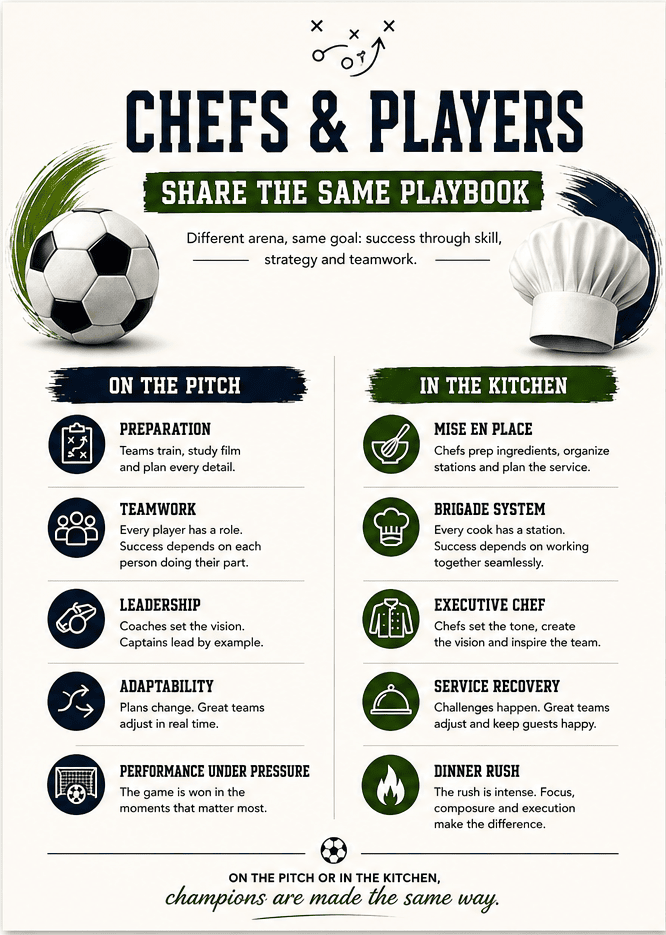
Whether preparing for a World Cup match or a packed Saturday-night service, athletes and culinary professionals depend on a lot of the same skills: preparation, teamwork, leadership, adaptability and the capacity to perform under pressure.
Mise en Place = Match Day
Cristiano Ronaldo once said, “Talent without working hard is nothing.”
Long before kickoff, elite players put in the work. Training sessions, scouting reports and pre-game routines help teams perform when the stakes are high.
Professional kitchens operate the same way. Hours before the first order comes in, cooks prep ingredients, organize stations and check equipment. This practice, known as mise en place, creates the foundation for a successful service.
When everything has a place, cooks can move quickly, communicate clearly and adapt when challenges arise.
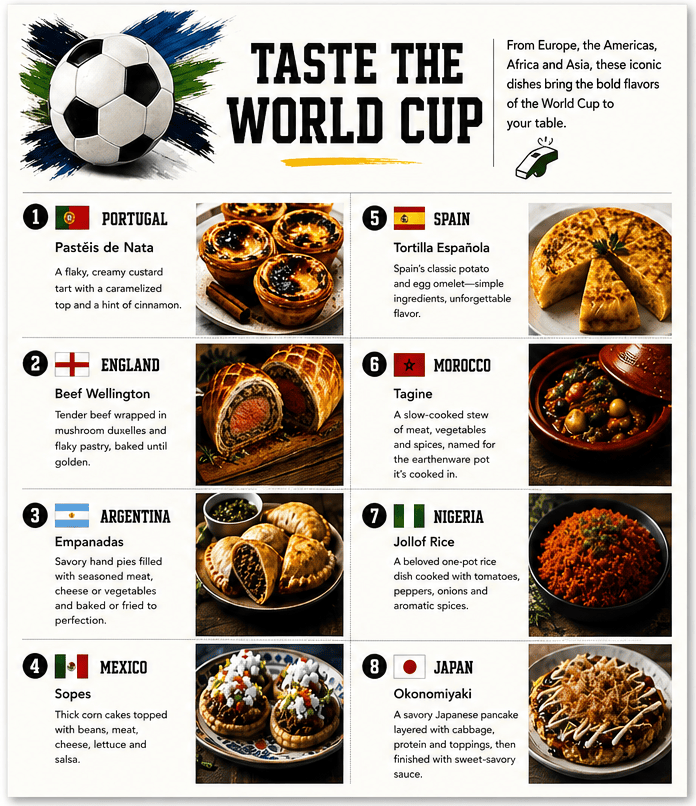
Individual recipes also require mise en place. Portugal's beloved pastéis de nata is a fitting example. The iconic custard tart demands planning, precision and consistency — qualities shared by pastry chefs and professional athletes alike.
No One Wins Alone
Soccer may celebrate stars, but teams win actual matches.
At game time, every player has a role. Defenders protect the goal. Midfielders control the pace. Forwards create scoring opportunities. Success depends on trust, communication and execution. No single player wins the World Cup alone.
Professional kitchens have their own version of this roster: the brigade system.
Line cooks, pastry cooks, sous chefs and executive chefs each perform specialized roles that keep service moving. In professional kitchens — just as on the pitch — a missed task or ticket can affect the entire brigade.
Study Your Competition
World Cup teams spend hours reviewing film, analyzing opponents and refining strategy. The best teams never stop learning. The same is true in professional kitchens.
Chefs dine at other restaurants, study trends, experiment with techniques and test new ideas. Inspiration can come from anywhere — a competitor's menu, a different cuisine or a new ingredient.
Growth rarely happens by accident. It comes from observation, curiosity and a willingness to improve.
Leadership Matters
A coach doesn't score goals… and an executive chef doesn't cook every dish. Both, however, play a critical role in shaping team culture, setting expectations and helping players perform at their best.
Strong leaders create consistency. They solve problems, communicate clearly and reign in focus when challenges arise. These same leadership skills help kitchen staff navigate a busy service. Behind every successful operation is someone setting the tone.
Thrive Under Pressure
Few sporting events create more pressure than the World Cup. Millions watch every pass, save and goal. Players must make split-second decisions while maintaining focus in front of a global audience.
A busy dinner service can feel the same. Tickets arrive nonstop. Timing is critical. Guests expect consistency with every plate. Here, success depends on staying calm, pivoting quickly and executing under pressure.
The Final Score
World Cup matches take place on the pitch, but their lessons extend beyond the game. Preparation. Teamwork. Curiosity. Leadership. Resilience. These qualities enable championship wins. They also help culinary professionals build successful careers.
👩🍳 ⚽ Step off the sidelines and into the kitchen.Enroll in our culinary programs today and build your championship skills at the Institute of Culinary Education.