
If you’re a Culinary Arts or Pastry & Baking Arts student at the Institute, you’ll hear the word “trail” early and often. Like “mise en place” or “hot behind,” it’s part of the language of professional kitchens.
But a trail isn’t just terminology. It’s your first real entry to the industry.
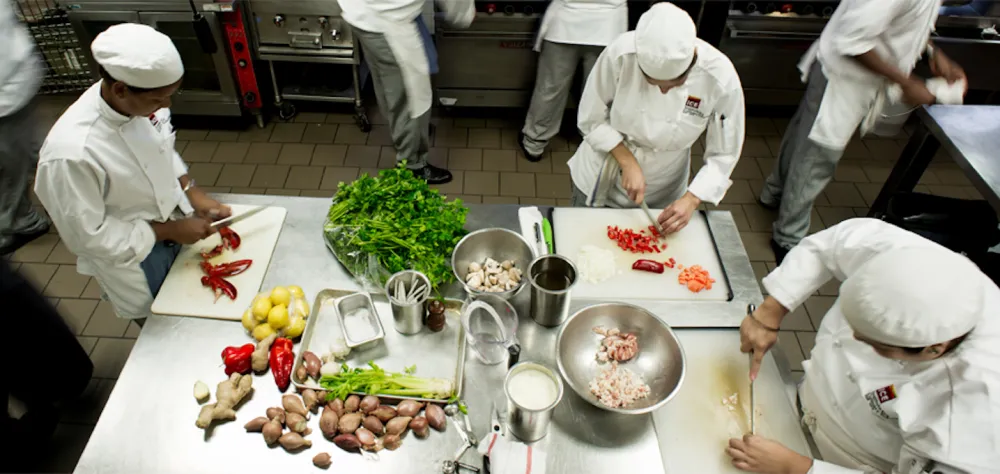
Imagine a job interview that lasts eight to 12 hours, where you’re evaluated not while seated at a desk, but while working the line — peeling, prepping and working alongside a team in real time. It’s immersive, fast-paced and more revealing than a traditional interview. In short, it’s how kitchens hire.
At our school, students complete trails as part of the externship process, gaining direct access to working kitchens across New York City and beyond. But trailing doesn’t stop there — it’s a practice chefs return to throughout their careers, from entry-level roles to executive leadership positions.
A trail is a working audition. It tests more than just knife skills — it’s about timing, communication, organization and how you move under pressure. Kitchens run on rhythm and awareness, and during a trail, your prospective employer is looking out for this.
The trail is also your opportunity to evaluate the kitchen. Culture, pace and expectations vary widely from one restaurant to the next, and a trail offers a level of transparency that no interview can match.
Walk In Ready: Mindset Matters Most
The strongest candidates don’t just show up prepared — they show up engaged. A positive attitude, willingness to listen and ability to adapt quickly will stand out just as much as technical skill.
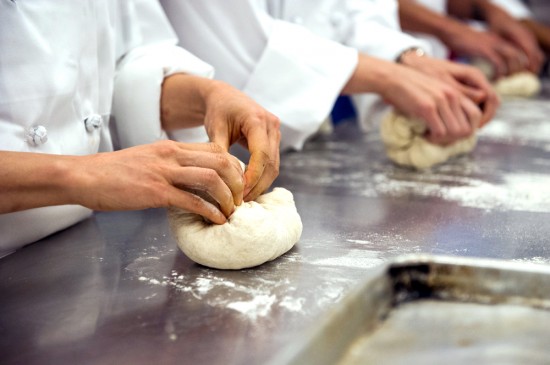
In professional kitchens, efficiency is built through repetition and awareness. Showing that you can absorb direction and improve in real time can be what sets candidates apart.
What to Wear (Before and During the Trail)
First impressions start before you step into the kitchen. A clean, simple outfit (think pressed pants and a button-down) is appropriate when you arrive.
Once you change, your uniform should be complete and professional: clean chef whites, proper footwear, apron, hat and neatly tied-back hair. Skip jewelry and keep fragrance minimal; kitchens are sensory environments, and details matter.
What to Bring (and What to Leave Home)
Bring only what you need to work efficiently:
- Chef’s knife, paring knife, serrated knife
- Peeler and sharpening steel
- Pastry students: offset spatula + thermometer
- Small notebook, pen and Sharpie
Leave valuables, excess tools and distractions behind. Phones should be off and out of sight — focus is part of the evaluation.
Timing Is Everything

Kitchens operate on tight schedules, so timing your outreach matters. The best window to contact a chef is typically before or after service on slower days — usually Monday through Thursday between 3 and 5 pm.
How Many Trails Should You Do When Seeking Work?
For your first role, three to five trails is a strong starting point. This gives you enough exposure to compare kitchens without overwhelming your decision-making.
As your career grows, short stages and one-day trails become a way to expand your network, refine your skills and stay connected to the industry.
At its core, trailing is about access — to kitchens, to mentors and to real-world experience. It’s one of the fastest ways to understand how professional kitchens operate and where you fit within them.
That exposure is built into the training, giving students a direct path from the classroom into the industry.
🎓Learn more about the Institute’s career training programs.
More by Tessa Thompson