
Despite Frank Sinatra’s famed, “If I can make it there, I’ll make it anywhere,” a hit New York restaurant does not guarantee success elsewhere — specifically, it does not guarantee success in Los Angeles.
In fact, entrepreneurial LA transplants often find that it doesn’t matter if a concept “made it” in New York (or San Francisco, Chicago, or Paris, for that matter). Opening a restaurant in Los Angeles has its own unique challenges.
David Chang, Christina Tosi, Dominique Ansel, and Jean-Georges Vongerichten, to name just a few, have all opened West Coast operations, and each can attest to the unique local factors L.A.'s vast restaurant market presents.
Location, Location, Location
No matter how many trips one makes to L.A., whether to work, visit or escape winter, only locals can fully understand the city’s complex restaurant landscape.
“Someone will judge L.A. based on one area, like Venice or Beverly Hills,” chef Andrew Lakin explains. “There are eight distinct neighborhoods, and restaurant operators need to understand how diverse the neighborhoods are.”
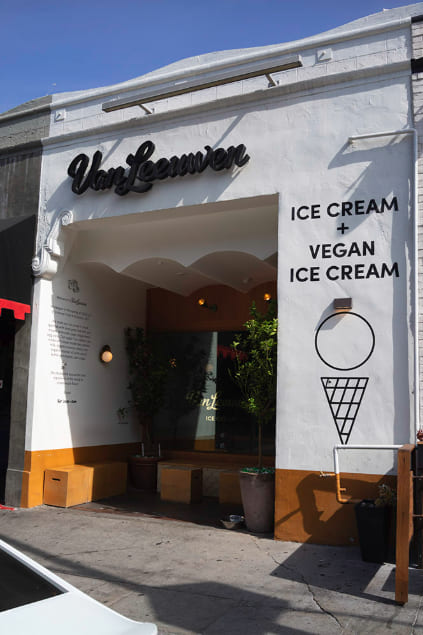
Before settling on an L.A. address, Pete Van Leeuwen, of the beloved New York-based ice cream shop, researched locations by having two of the brand’s pastel yellow trucks roam the city for two years.
“None of us had any experience with L.A. outside of a couple of quick visits,” he said. “We tried to learn the landscape and feel out some of the neighborhoods to see where we might fit in.”
He added that locals would recommend blocks that seemed deserted, which felt oddly out of sync with his New York team’s instincts.
“I quickly got used to the fact that nothing in L.A. compares to the average New York City foot traffic,” he explained. “We’d have to reshape our thinking of how or where and what might be successful by L.A. standards.”
Nick Jacobs, a born and raised Los Angeleno and ICE Culinary/Hospitality Duel Diploma alum, co-signs Van Leeuwen's idea.
After opening The Glendon Bar & Kitchen in L.A.’s Westwood Village in 2009 and consulting and working overseas, he returned to L.A. to become the director of operations for Blue Ribbon Restaurants’ first Los Angeles outpost. The restaurant's location was The Grove, which is an outdoor mall that's the size of a small village.
“The Grove was [Blue Ribbon's] idea of what L.A. was,” Chef Nick says.
However, the majority of The Grove's retail and restaurant patrons are out-of-towners.
Bridging that gap — between L.A.'s reality and the company's perception of it — took "two years of growing pains," says Jacobs.
“We had to learn the Angeleno clientele, and that there is a tourist clientele," he notes.
Another major differentiator: L.A. rests on car culture, and traffic can squash locals’ desire to drive beyond their work week commutes.
Of his own growing pains, Van Leeuwen points out that "ice cream is generally an impulse buy." In short, Angelenos don’t typically leave their houses for it (unlike New Yorkers).
“If you're already at home," he says, "it's highly unlikely that you will get back into your car to drive to an ice cream shop, find parking or pay for parking, buy ice cream, and 10 minutes later get back in your car to drive home.”
It's why his ice cream shops are always within walking distance of a nightlife hub. Rather than relying on high-intent consumption, they entice customers “while they’re already out and about.”
No Reservations?
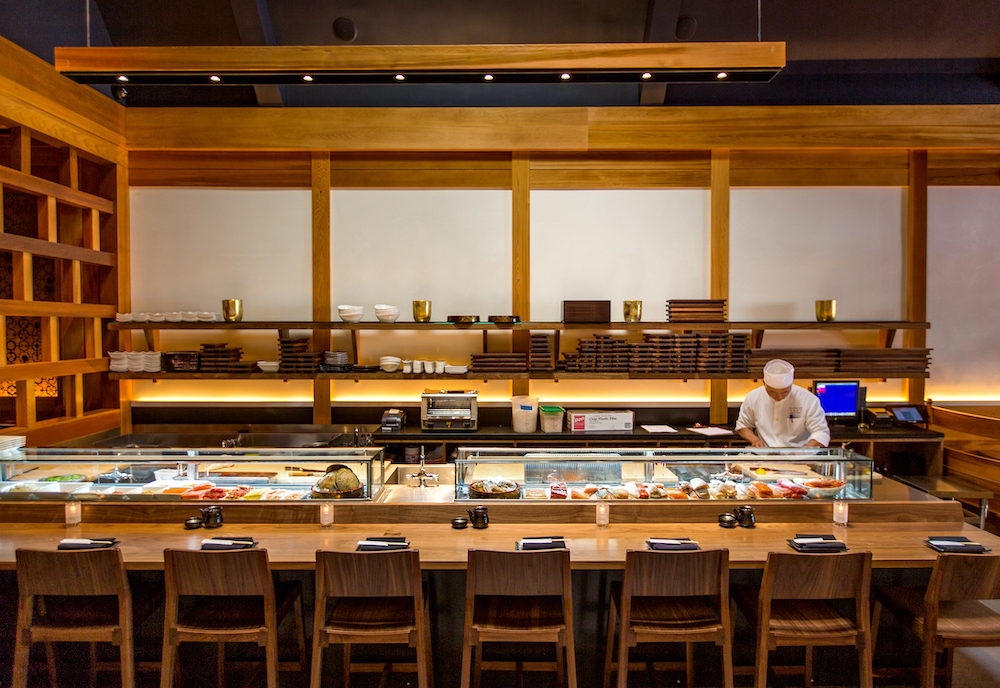
In New York's Soho neighborhood, Blue Ribbon Sushi maintains a no-reservations policy, which New Yorkers are accustomed to — no matter the pecking order. At the restaurant’s second L.A. location in Pacific Palisades Village, Jacobs had concerns that Angelenos wouldn’t go for the walk-in-only policy.
“We do things differently in Los Angeles,” Jacobs says, pointing to the fact the guests in L.A. did not conform to a no-reservations system.
“Blue Ribbon [in New York] doesn’t care about celebs, but do you think Jennifer Garner is going to stand and wait?” he asks, explaining that the shift from walk-ins to reservations was incremental — what started with 50 covers a night on OpenTable, with the remainder as walk-ins, eventually expanded to nearly all reservations.
Angelenos Have Unique Appetites
Operators entering new markets must also consider local palates and preferences.
"There was far more interest in our vegan line in L.A. than in New York," says Van Leeuwen, so we weighted the menus with a bit more vegan.
Chef Dominique Ansel, of cronut fame, also carefully considered his L.A. audience, noting that "it’s not simply cut and paste from New York."
“At each of our shops, we make sure the menus are unique and take inspiration from local ingredients and traditions.”
Accordingly, Chef Dominique added items like a mango passionfruit soft-serve taco and an avocado toast ice cream sandwich to the menu of his L.A. outpost.
"L.A. represents a place of curiosity and open-mindedness,” he says. "It’s such a vibrant city with so much diversity.”
The Last Word on L.A.
“At the end of the day you can be doing great work everywhere, but you can ruin everything by going somewhere too foreign to you.”
Still, the allure of opening food concepts in Tinseltown persists — despite all its challenges, quirkiness and traffic. And now you can prepare and strategize with the Restaurant & Culinary Management program at our L.A. campus.