Photo of a laptop featuring the Online Culinary Arts & Food Operations.

Online - Culinary Arts & Food Operations

Get professional culinary school training — without putting your life on hold.
Our accredited online Culinary Arts & Food Operations diploma program teaches foundational cooking skills, culinary theory, and business fundamentals through a flexible online format designed to prepare you for real careers in food.

Diploma Program

100% Online Curriculum + Industry Externship*

Get foundational, professional culinary training — from your own kitchen. This 900-hour program from the Institute of Culinary Education teaches core cooking techniques, culinary theory, and food business fundamentals to prepare you for a professional career. 

Students complete a required industry externship and earn a diploma in Culinary Arts & Food Operations without relocating to New York or Los Angeles. The online program is available to students in select states and taught by expert Chef-Instructors.

*Externship must be completed in person.

Quick Facts

Program Name: Culinary Arts & Food Operations

Program Duration: 16 months

Weekly Virtual Classes: participate live or view on-demand

Get More Info

Curriculum Designed by Experts

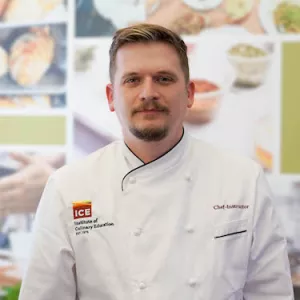
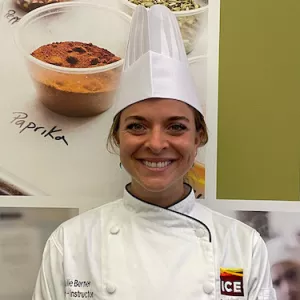
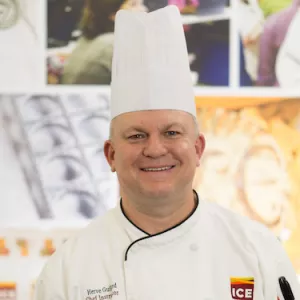
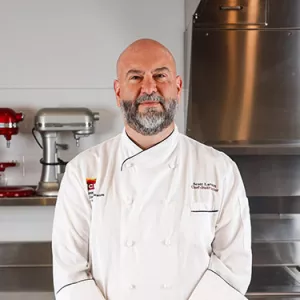
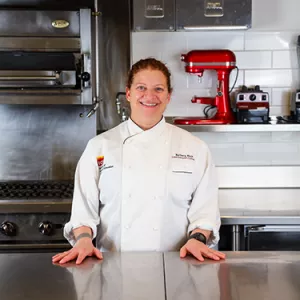
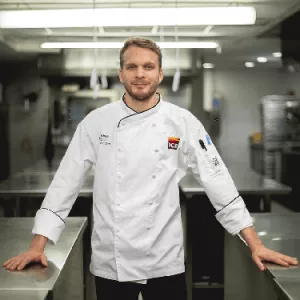
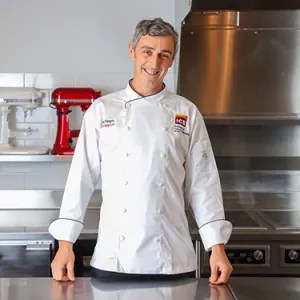
The online curriculum was developed by culinary experts from our NYC and LA campuses — two of the world’s leading culinary capitals. As a #1-ranked culinary school*, we deliver a structured program led by 24 Chef-Instructors who bring real-world experience, subject matter expertise and industry insight to every lesson. Students are taught the foundational techniques and professional skills used across careers in restaurants, hotels and food-service operations — all without requiring on-campus attendance.

Alumni Recommend Us

“The online format made it possible to maintain a full life while pursuing this as both a passion and a career.” — Jason Sims, Online Culinary Arts Grad

“ICE was an experience that helped me “level up” as a restaurant owner.”  Meymuna Hussein-Cattan, Online Culinary Arts Grad

Culinary Leaders Recommend Us

“Culinary school is a shortcut to learning techniques that would otherwise take years to develop in a restaurant.” — Eric Ripert, Chef/Owner, Le Bernardin

"ICE is a cornerstone of our industry, consistently driving innovation and pushing the boundaries of culinary creativity.” — Chef Wolfgang Puck, Celebrity Chef/Restaurateur
 

chef presenting dish

Hands-On Instruction

Our online learning model teaches culinary theory, food science, and classic techniques — the core principles behind all cuisine. Students are also taught pastry and baking fundamentals, food-service operations, and hospitality management. Coursework includes videos, readings, projects, and chef-led classes available live or on demand. 

ICE online student taking a photo of her food with her phone.

Feedback That Moves You Forward

Students receive regular, personalized feedback via photo, video, and written submissions. Chef-Instructors deliver targeted guidance multiple times per week, helping students refine techniques, remain accountable, and progress with confidence.

Real-World Experience & Career Support

Following coursework completion, students gain work experience in an on-site externship, after which, they benefit from ongoing career support and access to our 20,000-strong alumni network. Graduates receive a diploma in Culinary Arts & Food Operations and may participate in the school's annual commencement ceremony. Students also have the option to pursue an online culinary associates degree


Industry Exposure Beyond the Classroom

Our campuses frequently host demonstrations, lectures, and professional development events led by culinary experts from across the country. When available, online students may participate virtually or in person through the New York and Los Angeles campuses at no additional cost. These exclusive education opportunities offer creative inspiration and fresh industry insights.

Flexible Learning, Exceptional Instruction

ICE online student in front of her laptop and a ladle of soup.

The Institute of Culinary Education is approved to offer online distance education in select states. Courses are taught asynchronously, allowing students to learn on their own schedule.

Tuition includes all required books and supplies — including a laptop — plus access to the school's popular Wine Essentials series.

Financial aid and other payment assistance options are available to qualifying students. 

Learn more about Tuition and Discounts here. 

Click to Open

Online (weekly)

  • Program duration: 16 months
  • Hours: approximately 18 hours per week
  • Start Dates: June 6

SCHOLARSHIPS & GRANTS

Many students are eligible to receive income-based financial support. Options include:

  • Federal Pell Grants
  • School Scholarships
  • Third Party Scholarships

Learn More About Grants & Scholarships

STUDENT DISCOUNTS

Tuition reductions are available to qualifying students. Options include: 

  • Military Discount
  • Out-of-Area Discount
  • Dual Diploma Discount

Get More Information

Take the Next Step

This is the beginning of chasing down your dreams. We have 20,000+ alumni, many of whom regularly engage with our students, offering rich career insights and opportunities. Are you ready to be among them?

Why Choose Us?

You know you've got it — the passion for cooking, and the ambition to turn your passion into a profession.

10 Reasons To Study Here

Global Reach... From Your Kitchen

Our graduates work in food businesses throughout the world, yielding a vast professional network. 

See What Our Alumni Are Up To

Tap Today. Transform Tomorrow. 

You dreamed it. Now do it. Download our career brochure, talk to Admissions, or apply today.

Request Info | Apply Today | View Brochure

The Institute of Culinary Education's online Culinary Arts & Food Operations program delivers professional culinary training through 16 courses completed over 63 weeks — all from your own kitchen. Students are taught fundamental cooking skills, culinary theory and hands-on techniques through flexible weekly classes designed to fit their schedules. Expert Chef-Instructors from our New York and Los Angeles campuses lead instruction in core techniques, global cuisines and industry standard practices.

Recognizing that professional kitchens operate as businesses; the program also includes coursework in food operations and management. Students gain practical exposure to marketing, purchasing and staff management — essential skills for long-term career success.

The program ends with an off-site externship selected based on each student’s career goals. Our Career Services team supports placement by aligning opportunities with students’ skills, schedules and academic progress.

Program structure: 

Course 1

INTRODUCTION TO ONLINE LEARNING & RESTAURANT REALITIES

13 hours

This course is designed to familiarize students with best practices for success in our online program and in the restaurant industry. Topics include learning management system use, internet research and time management. We also introduce the tenets of professionalism and the expectations of the food service industry.

Course 2

CULINARY FUNDAMENTALS

90 hours

Most culinarians begin their training by learning how to pare and prepare greens and vegetables. After a comprehensive introduction to knife skills and food safety, students will use a range of methods for preparing vegetables, progressing from salads to complex vegetarian cuisine, to explore the techniques that underlie fine cooking.

Course 3

CONCEPT DEVELOPMENT & MENU DESIGN

21 hours

This course is designed to acquaint students with the realities of a culinary business by exploring concept development from creativity to profitability. By surveying the industry, students explore many types of operations and analyze concepts, as well as research feasibility and location selection. Students should gain the knowledge required to develop and refine their ideas. This course also covers key aspects of menus, including planning, pricing, layout and design. Students prepare sample menus as a project.

Course 4

CULINARY FUNDAMENTALS 2

60 hours

The first in a series of three courses on protein-based cuisine, this poultry-based course will cover key techniques like sautéing, roasting, braising and grilling. Students will fabricate the essential cuts and prepare stocks and sauces that completely utilize each ingredient. The class will prepare dishes to practice each technique and build confidence and competence.

Course 5

FOODSERVICE FINANCE

30 hours

A working understanding of numbers is critically important to culinary success. The curriculum for this course focuses on the use of financial statements as a tool for cost control and decision-making. The course progresses from teaching students how to associate numbers with financial and logistical aspects of a foodservice business to an overview of budgets, industry standards and variation analysis. Case studies are used to provide real world examples.

Course 6

CULINARY FUNDAMENTALS 3

60 hours

Pork is one of the most versatile meats, providing diners with everything from sausage and chops, to ribs and medallions. All of these cuts offer the opportunity for students to advance their culinary skills while exploring new flavors and plating styles. Lamb is also featured in this comprehensive course. 

Course 7

SUPERVISION

27 hours

People are the most important resource in any culinary business. This course focuses on the major functions of management communication, hiring practices, recruitment, training, discipline and staff organization.

Course 8

CULINARY FUNDAMENTALS 4

60 hours

In this final course on protein-based cuisine, students prepare grilled steak, braises and stews along with brown sauces and pan sauces aiming to deepen understanding of fundamental techniques. The class applies these methods to seafood, as students prepare dishes that highlight the special skills that these foods require.

Course 9

PURCHASING & COST CONTROL

27 hours

Strategies for purchasing and control are vital for the success of any culinary operation. This course examines labor, beverage and food costs, and revenue control. Purchasing guidelines, inventory and control, employee-performance standards, productivity and scheduling, use of point-of-sale systems, computers, and new technology are also reviewed.

Course 10

PASTRY & BAKING

90 hours

The skills taught in this course are not just for desserts – they can be used in savory cooking as well. From custards and pizza to biscuits and cakes, students prepare specialties that can be part of exciting entrees or memorable finales to the dining experience.

Course 11

COMMUNICATIONS, SOCIAL MEDIA & PUBLIC RELATIONS

21 hours

Effective communication is essential for success in all areas of food service, from management to menus. This course uses media, including reviews, blogs, tweets, videos and press releases, for students to explore the relationship between restaurants, communication and public relations.

Course 12

RESTAURANT ESSENTIALS

60 hours

Students explore important restaurant staples with an emphasis on lunch, brunch and breakfast specialties from biscuits and gravy to Eggs Benedict. There is also an extensive exploration of sandwiches, fresh and dry pasta, and sauces.

Course 13

LEADERSHIP, TEAM BUILDING & CHANGE MANAGEMENT

21 hours

Great leadership goes beyond good management and permeates a culture. This course explores leadership variables and principles, the power of vision, the importance of ethics, the empowerment of people, understanding people, developing others, and performance management. Additionally, instructors help students identify their own leadership styles and how best to utilize them to maximize leadership through organizational change and team building.

Course 14

INTERNATIONAL CUISINE 1

60 hours

In the panoply of global flavors, Asian flavors and techniques exert a growing influence on culinary arts around the world. Understanding how to use the herbs, spices, ingredients and methods that characterize these cuisines is a necessity in today’s food culture. This course acquaints students with the flavor profiles, specific techniques and essential dishes of Asia and the Americas.

Course 15

INTERNATIONAL CUISINE 2

60 hours

Continuing the exploration of food from around the world, this course examines key dishes, ingredients, flavors and techniques from the Middle East, Europe and Africa.

Course 16

EXTERNSHIP

200 hours

This is the last course in the program where students have an opportunity to hone the skills they developed in a real-world setting. While ICE strongly recommends restaurant kitchen externships, students may request venues such as hotels, catering companies, corporate dining rooms or test kitchens in accordance with their professional goals.

online culinary student takes photo of gnocchi

What's the Value of Professional Culinary Training?

Does formal online culinary education provide better skills training and more professional opportunities than learning on the job? Jericho Lee Chun Lai, a 2025 program graduate, says yes: "The knowledge I gained through these courses — through the lectures, labs, readings and discussions — have immeasurable value." 

Additional program benefits include real-world career readiness prep via externships at local food businesses; ongoing career support; and a global network of more than 20,000 alumni.

hand sprinkles pinch of salt into bouillabaise

What Can You Learn In Online Culinary School?

Professional cooking is a hands-on craft built on technique, repetition and real kitchen experience. So how does that translate to a remote environment — where you’re the only person in your kitchen? 

Our online culinary program mirrors many elements of our in-person education, combining comprehensive curricula, practical assignments, chef feedback and real-world industry experience. 

Inside a modern looking restaurant dining room.

What Does "Food Operations" Mean?

The food operations component of your online culinary training is unique to our remote programs. (To receive a similar benefit, students attending in-person programs can enroll in our Dual Diploma option.) 
Food operations speaks to culinary career goals that include owning or operating a restaurant or other food business. Here, you get a real-life view of modern culinary entrepreneurship and receive training in the skills needed to launch and lead a food business.