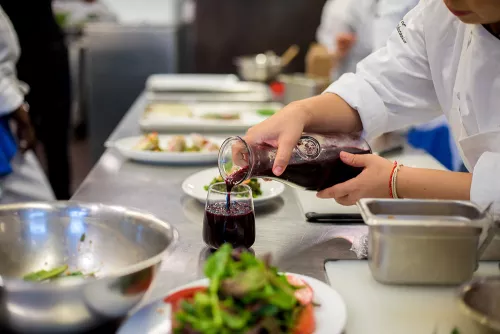
Fundamentals of Culinary Arts
2.0 credits
Focusing on fundamental culinary techniques and criteria for selecting quality ingredients, this course offers an introduction to culinary technique as applied to plant-based foods. After an introduction to knife skills, sanitation, food and kitchen safety, culinary math, and nutrition science, the course teaches a broad range of cooking methodologies for preparing health-centered foods. Students begin with an exploration of the techniques and methods that are the foundation of fine cooking. Course highlights:
- Herb Grilled Vegetable Panini with Homemade Potato Chips
- Caramel Braised Belgian Endive with Sage
- Red Wine Poached Pears with Spice Fruit Compote
Foundations of Health-Centered Culinary Arts 1
2.0 credits
In the course, we continue your education in plant-forward cuisine to include a variety of bean and grain, stock, sauce, and soup preparations. We discuss sustainable food systems and our impact on the environment. You explore the health and culinary benefits of fermented foods, create mixed and composed salads, and make classic vinaigrettes. This course also includes health-centered approaches to cooking with alternative dairy products and eggs, and an in depth look at the role of carbohydrates and fiber in our diets. Course highlights:
- Miso Soup with Soft Tofu, Soba Noodles, and Baby Bok Choy
- English Pea Crostini with Mint and Pea Shoots
- House Fermented Sauerkraut, Kimchee, Miso, and Mango-Hot Sauce
Foundations of Health-Centered Culinary Arts 2: High-Protein Foods
2.0 credits
In this course we teach how health-centered protein sources come in a variety of forms. Students are taught to fabricate chicken, fish and shellfish, and apply basic culinary techniques to prepare them. Students also explore the health benefits of protein-rich foods and create plant-based protein-rich meals, making fresh tofu and seitan from scratch, and utilizing ingredients such as tempeh and mushrooms. Course highlights:
- Dashi Braised Chicken with Japanese Sweet Potato, Carrot, Turnip, Shiitake, and Ginger
- Pan Seared Day-Boat Scallops with Roasted Maitake Mushrooms, Sautéed Mustard Greens, and Yuzu Hollandaise with Salmon Roe
- Wakame, Cucumber, Asian Pear, and Citrus Salad with Toasted Sesame Seeds
Foundations of Health-Centered Culinary Arts 3: Advanced Culinary Applications
2.0 credits
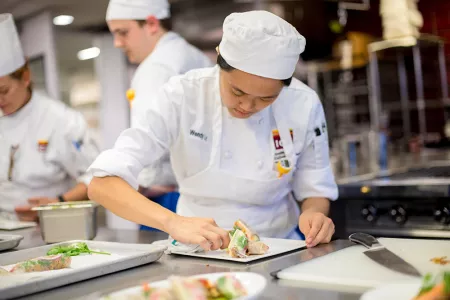
In this course, students are taught to use sea vegetables in both sweet and savory dishes and prepare a variety of pod, seed, bulb, and cruciferous vegetables. Students also practice sandwich production, participate in multi-day restaurant simulations, and receive training in plating techniques. Continuing our exploration of nutritional topics, we investigate the role of fats and oils in human health and improvisational cooking. We also spotlight nutrients of concern for health-centered diets. Course highlights:
- Buffalo-Style Cauliflower with Pumpkin Seed ‘Blue Cheese’ Dip
- Pan Seared King Oyster Mushroom, Shallot Pan Sauce, Sautéed Swiss Chard, and Pommes Darphin
- Smoked Tea Leaf Brined Tempeh Reuben Sandwich with House-Fermented Sauerkraut, Cashew ‘Gruyere Cheese’ Spread, and Vegan Russian Dressing
Baking and Desserts
2.5 credits
This course explores the fundamentals of baking, from classic techniques to modern alternatives. Students prepare baked goods and desserts that meet special dietary needs, such as vegan, wheat-free, gluten-free, and dairy-free. We study the principles of converting conventional baking recipes to alternatives featuring whole-grain flours and less-refined sweeteners, without sacrificing taste or texture. Students explore how to make yeasted breads, classic desserts, quick breads and cakes. The course concludes with the principles of the modern dessert plate. Course highlights:
- Aquafaba Meringue Pavlova with Vegan Crème Anglaise and Berries
- Vegan Ginger-Lemongrass Ice Cream
- Pizza, Focaccia, and Bagels
International Cuisines 1
2.5 credits
In this course you explore the fundamentals of pasta and noodles. Using your growing command of techniques and culinary skills, you prepare fresh pasta sauces and seasonally-inspired pasta fillings. You’re taught how to use the herbs, spices, ingredients and methods that characterize international cuisines, with emphasis on flavor profiles and techniques from Europe, the Middle East, and the Americas. Course highlights:
- Butternut Squash Ravioli with Sage-Brown Butter
- Baja Style Fish Tacos on Homemade Corn Tortillas
- Creamy Polenta with Cremini Mushroom and Tuscan Kale Ragu
International Cuisines 2
2.0 credits
In this course you continue exploring world cuisines, including regional menus from China, India, Japan and Southeast Asia. This course explores Ayurvedic and Macrobiotic cooking, along with principles of mindful eating. You discover menu planning and recipe development and testing, and you prepare healthy spa cuisine menus using seasonal ingredients. Course highlights:
- Dim Sum: Vegetables Spring Rolls, Edamame Potstickers, Shrimp Shumai, Scallion Pancakes, and Vegan BBQ Steamed Buns
- Kasha and Walnut Stuffed Heirloom Eggplant with Za’atar Roasted Baby Carrots, Pomegranate, and Green Goddess
- Miso Glazed Black Cod with Japanese Pickled Daikon and Cucumber and Sesame-Shoyu Kudzu Glaze
Advanced Culinary Technique
2.5 credits
In this course you prepare pates and terrines, hors d’oeuvres and canapés, and explore brunch cookery. You receive a hands-on introduction to sous vide technology and low-temperature cooking. You also focus on developing and presenting a four-course seasonal dinner project. In advanced restaurant-style lessons you serve recipes inspired by contemporary chefs, and create and serve your own plant-forward entrees. Course highlights:
- Truffles Portobello Mousse with Fig Preserves
- Sweet Potato Latkes with Pear-fennel Marmalade and Cashew ‘Crème Fraiche’
- ‘Bloodless Sausage’ with Pickled Pearl Onions, Mushroom Jus, and Marcona Almond Sauce
Concept Development and Menu Design
3.0 credits
This course acquaints students with the realities of a culinary business concept — from creativity to profitability. By surveying the industry, students research and assess various operational models, analyzing concepts, feasibility, and location selection. Students gain the knowledge required to develop and refine their ideas. This course also gives a comprehensive view of key aspects of the menu, including planning, pricing, layout, and design. Students prepare sample menus as a project, which become part of their final business plans.
Purchasing and Cost Control
3.0 credits
Strategic purchasing and cost control is vital to the success of any culinary operation. This course examines revenue control plus labor, beverage and food costs. Purchasing guidelines, inventory and control, employee performance standards, productivity and scheduling, use of point-of-sale systems, and new technology are also reviewed.
Marketing
2.0 credit
Culinary businesses are marketing businesses. This course examines marketing plan development — including market research, positioning, product mix, and life cycle — plus strategies for advertising, merchandising, public relations, social media and promotion.
Service Management
2.0 credits
Managing the front of house requires specific skills. Students are introduced to the tools and techniques of service and service management in restaurants and other food service operations. This course also covers how to build customer satisfaction.
Food Safety
1.0 credits
Proper food handling and safety procedures are key parts of successful culinary businesses. Here, students earn the nationally recognized ServSafe certification while learning the essential principles of food safety.
Finance and Accounting
3.0 credits
A working understanding of numbers is critical to culinary success. This course focuses on financial statements as a decision-making tool. Topics include balance sheets, statements of net income, break-even analysis, cash flow, and financing. Budgets, industry standards and variation analyses are emphasized. Actual case studies are used to provide real experience.
Supervisory Management and Food Service Law
3.0 credits
People are the most important resource in any culinary business. In this course students focus on the major functions of staff management, including leadership, motivation, communication, hiring practices, recruitment, training, discipline, and staff organization. In addition, this course focuses on the legal rights and responsibilities of owners and operators. Topics include labor relations, employment law, real estate and contracts. Various business structures are also surveyed.
Beverage and Wine
2.0 credits
Beverage sales is a challenging business. This course explores all areas of beverage service, including wine, spirits, beer, mixology, non-alcoholic drinks and bar design. Wine tasting and appreciation is included. Students study proper alcohol service and receive safe beverage service certification.
Facilities and Design
2.0 credits
This course examines how to bring a concept to life, from design through construction and final inspection. Whether planning to renovate or build a restaurant from scratch, students receive instruction in capital costs and budgeting, as well as how to work with architects, designers and contractors. Topics include equipment and systems basics, space analysis, product and people flows, and kitchen and interior design.
Business Communications
3.0 credits
This course considers communication in a culinary business setting by examining various business documents; aligning messages with delivery channels based on context, audience and purpose; and understanding the impact of technology, such as social media, on business language. Students assess written and verbal communication strategies as they relate to recipe writing, reviewing, food blogging and culinary demonstrations.
Social Psychology and Interpersonal Relations
3.0 credits
This course examines social context and the way it influences our thoughts, feelings, and behaviors. Students are encouraged to reflect on the application of social psychology concepts to real-world problems and to incorporate concepts explored in class to their own lives.
The History and Culture of Food
3.0 credits
This course explores the importance of food and food service throughout history. Influences on modern food service are analyzed, and culinary trends in history are identified and investigated. Topics include the relation of food to personal and cultural identity, and the interconnections between cuisine, historical events and international locations.
Food and Applied Nutrition
3.0 credits
In this course, students are introduced to the principle of human nutritional needs. Students examine nutrient function and current dietary guidelines and preferences, and study menus and recipes that optimize nutritional content while balancing nutrition trends and culinary and baking techniques. The course highlights the relationship between diet, health, disease and how applied nutrition can benefit both immune-challenged and average healthy populations.
Career and Self-Management
2.0 credits
This course is designed to support your transition to real-world hospitality industry work by providing career planning tools and highlighting the expected behaviors and soft skills essential for professional success. The course emphasizes three key areas — life planning, workplace skills, and career planning. Students are taught how to connect personal, professional, and financial goals, and how these goals contribute to career and personal success.
Leadership, Team Building and Change Management
3.0 credits
Great leadership goes beyond good management — it permeates culture. This course explores vision; ethics; multiplying effectiveness; performance management; and understanding, developing, and empowering people. Additionally, students identify their own leadership styles and how to leverage them through organizational change and team building.
Externship
8.0 credits
At the end of their in-class training, all students complete an externship course. While ICE strongly recommends that students extern in restaurant kitchens, they may request venues such as hotels, catering companies, corporate dining rooms, or test kitchens in accordance with their professional goals.