Culinary student in white chef coat and hat stands in home kitchen and photographs dish in front of laptop

Online - Health-Centered Culinary Arts & Food Operations Associate Degree

ICE's online Health-Centered Culinary Arts & Food Operations AOS degree program brings management classes and hands-on training in health-supportive culinary skills and techniques directly to you.

Diploma Program

Associate of Occupational Studies Degree with 100% Online Curriculum + Industry Externship*

An accredited degree in health-centered culinary arts is within your reach. At the Institute of Culinary Education, students in a growing number of states can earn an Associate of Occupational Studies (AOS) degree from the convenience of their own kitchen, along with an in-person externship in a professional food service environment. This 60 credit-hour program explores health-supportive culinary theory, science, technique and palate development along with an in-depth business education. The hands-on industry externship at the end of the AOS degree program allows you to enhance your skills and gain practical cooking and baking experience in the hospitality industry.

There’s no need to put your life on hold to pursue your culinary passion. If you’re unable to relocate or attend in-person classes at an ICE campus in New York or Los Angeles, you can still earn an Associate of Occupational Studies degree in Health-Centered Culinary Arts & Food Operations through online instruction. Our online culinary AOS degree program features a customized curriculum full of culinary arts and business management courses led by experienced chefs and management instructors.

*The externship portion of this program must be completed in person.

Quick Facts

Program Name: Health-Centered Culinary Arts & Food Operations Associate of Occupational Studies Degree

Program Duration: 22 months

Weekly Virtual Classes: participate live or view on-demand

Get More Info

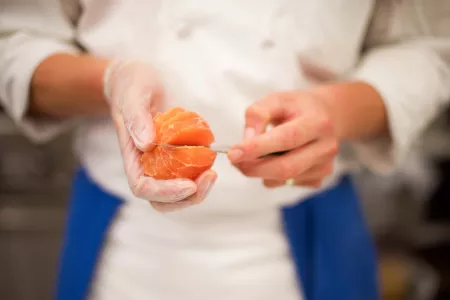
chef hands preparing noodles with vegetables

Online Courses Designed by Experts

The online Health-Centered Culinary Arts & Food Operations AOS degree program has been expertly designed by the professional chefs and educators from ICE's New York and Los Angeles campuses. The program's curriculum gives students who are unable to attend on-campus classes the instruction and experience required for a variety of food service roles. Online instructors use a proactive assessment model to provide individualized feedback on students' work several times a week. 

ICE student stirring chickpea curry ingredients into saucepan while watching recipe instructions on ipad.

Weekly Culinary Labs in Your Kitchen

Our meticulously curated labs allow you to apply techniques covered in readings, videos, group projects and chef-led classes. You’ll use recipes designed to develop your palate and reinforce essential techniques. Lessons include how to:

  • Correctly slice, dice and fabricate.
  • Make soups and sauces.
  • Grill, sauté, roast and braise plant-based dishes.
  • Bake an array of breads, cakes and pies.
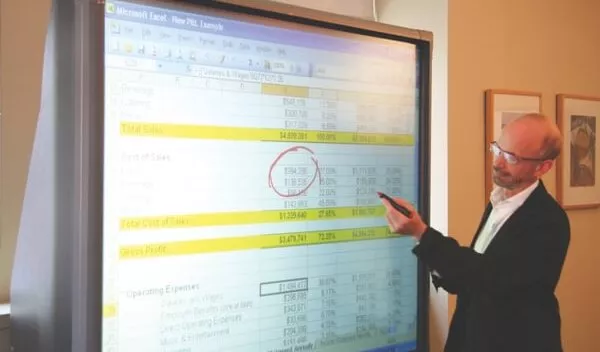
Culinary Management Instructor reviews P&L report in spreadsheet

In-Depth Culinary Management Online

ICE’s Restaurant & Culinary Management courses are taught completely online and offer practical training in restaurant management, operations and entrepreneurship. Our experienced instructors provide lessons in trend analsyis, writing a business plan, marketing your venture to a target audience and troubleshooting management issues. Coursework includes case studies, role-playing and group projects. Students also study menu design, social media marketing and kitchen and interior design.

A female student wearing heaphones and a blue shirt takes notes on a notepad while in front of a laptop

Applied General Education Classes Online

Students take general education courses that are relevant to restaurant industry careers, such as the history and culture of food, social psychology, change management and more. You'll study written and verbal communication strategies as they relate to recipe writing, reviewing, food blogging and culinary demonstrations; team building through developing and empowering people; and nutrition in terms of dietary preferences and the relationship between diet, health and disease.

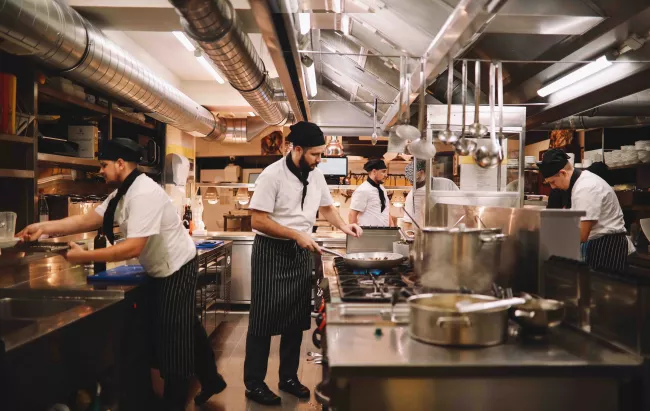
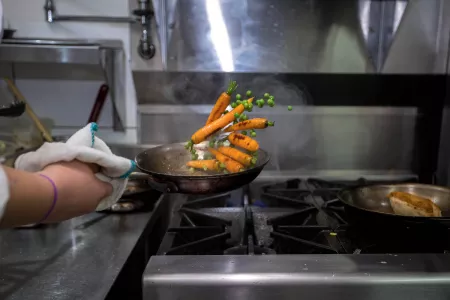
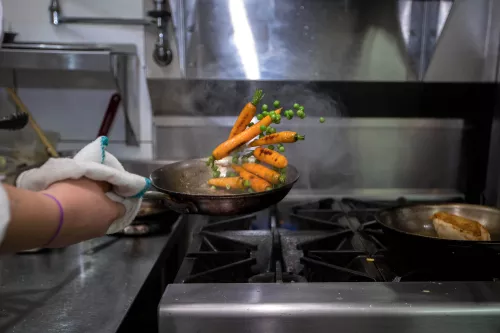
A chef stands in professional kitchen cooking on a stove

Hands-On Industry Externship

After you have completed your online AOS degree courses, you will take the exam that matters most: working in a professional kitchen or food-related business. Our Career Services team will help match you with a restaurant, bakery or food-centric business, enabling you to gain hands-on experience working in the real world. During your externship,  you will put your health-centered culinary skills to the test, and you will have the opportunity to make industry connections and gain business knowledge you can use to launch your career.

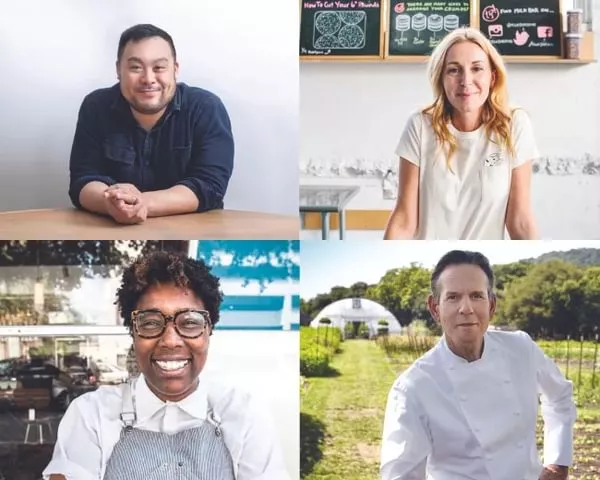
Past ICE guest speakers chefs David Chang, Christina Tosi, Mashama Bailey and Thomas Keller

Professional Demonstrations and Extracurricular Programming

Industry experts regularly share their knowledge in person and online via exclusive professional development classes, demonstrations, lectures and events. Past guests include chefs David Chang, Christina Tosi, Mashama Bailey and Thomas Keller (all pictured left). ICE online AOS degree students can take advantage of these opportunities to watch and interact with (when viewed live) successful epicureans from various industry sectors.

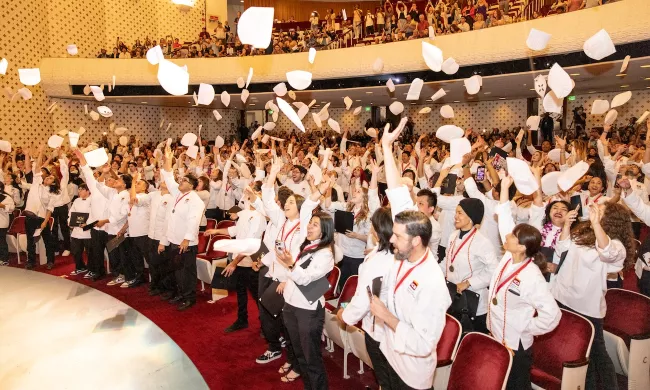
Culinary Arts & Food Operations students toss their toques into the air at ICE graduation

Graduation and Career Placement

Upon successful completion of the program's curriculum and externship, you’ll receive an Associate of Occupational Studies degree in Health-Centered Culinary Arts & Food Operations and have the option to join our commencement ceremony in Los Angeles. You’ll also benefit from the ongoing support of our Career Services department, which has helped thousands of graduates secure jobs in the restaurant and hospitality industry.

Online Associate Degree Program Schedule

ICE is approved to offer online distance education to students in select states. The online Health-Centered Culinary Arts & Food Operations Associate of Occupational Studies degree program is taught asynchronously, which means you are not required to login to a virtual course at a specified time

Tuition includes all books and supplies, including a laptop, so you're fully equipped from day one. Visit our Tuition and Discounts page for complete information on the cost for specific class dates.

Online Associate of Occupational Studies Degree Program Highlights

Health-Centered Culinary Arts

  • Study fundamental culinary techniques and a broad range of cooking methodologies for preparing health-centered foods.
  • Explore the essential flavor profiles and classic dishes of regions in North America, France, Italy, Greece, North Africa, Asia and India.
  • Pursue modern and ancient cooking techniques including sous vide, fermentation, preserving and contemporary plating.
  • Train in the art of health-centered cooking through theory, technique, palate development, speed and teamwork.

Baking & Pastry Arts  

  • Study the fundamentals of pastry and baking, which can be applied to sweet and savory cooking.
  • Prepare baked goods and desserts that meet special dietary needs, such as vegan, wheat-free, gluten-free, and dairy-free.
  • Practice converting conventional baking recipes to alternatives featuring whole-grain flours and less-refined sweeteners, without sacrificing taste or texture. 

Restaurant & Culinary Management

  • Explore the interplay between concept development, menu design, pricing and profitability.
  • Study the basics of cost control and restaurant accounting, including the development of a business plan.
  • Examine "the people side" of the food business as it relates to hiring, staff supervision and service management.

General Education and Career Development

  • Develop written and verbal communication skills as they relate to recipe writing, reviewing and culinary demonstrations.
  • Explore the interconnections between cuisine, historical events and international locations and the growth of America's culinary culture.
  • Connect personal, professional and financial goals to examine how they contribute to career and personal success, as well as the importance of leadership and team-building.
  • Study the relationship between diet, health and nutrition, and how a culinary professional can use this knowledge.

This 60-credit program leads to an associate degree in occupational studies (AOS). It is composed of:

  • 30 credit hours of culinary arts, offered online (except externship which is at a foodservice site)
  • 21 credit hours of culinary management, offered online
  • 9 credit hours of applied general education, offered online

Program duration varies according to the schedule option selected. The length of time normally required for completion of each schedule option is determined by calculating the average number of weeks including student-free days and holidays.

Click to Open

Associate of Occupational Studies Degree Program Start Dates

  • Start Dates: July 6
Click to Open

Health-Centered Culinary Arts Classes

  • Asynchronous
  • 30 credit hours in total
Click to Open

Restaurant & Culinary Management Classes

  • Asynchronous
  • 21 credit hours in total
Click to Open

Applied General Education Classes

  • Asynchronous
  • 9 credit hours in total

Take the Next Step Toward a Culinary Career

The admissions process is the start of a lasting relationship with ICE. Your Admissions Representative will introduce you to the personal experience the culinary arts school is known for. Their mission is to understand your career goals and help you select the right program(s) to fit your needs and your interests.

Why Choose Us?

You know it's in you — the ambition to pursue a rewarding career in food. ICE is ready to help you find your culinary voice and achieve your culinary career dreams.

10 Reasons To Study Here

Learn about Career Services

Attending a well-established school like ICE has many benefits, including the vast professional network available to students from day one. With campus recruitment from top hospitality brands, regular ‘hot job’ emails, and ongoing support long after graduation, your Career Services team is here to help.

Explore Our Career Services Page. 

Resources:

Ready to take your interest in ICE further? Speak to an Admissions Representative about your personal goals, start your application or download our career brochure so you can access our program information anytime.

Request Information

Apply Today

LA Career Brochure

ICE’s Online Health-Centered Culinary Arts & Food Operations Associate of Occupational Studies degree program offers students comprehensive training in the art and practice of heath-supportive cooking, as well as entrepreneurial fundamentals in business management. The degree program is designed so students can attend classes on their own schedule each week.

The final course in the program is an off-site externship at a location chosen by the student based on their career goals. ICE's Career Services Advisors consider the student's career aspirations, skills, schedule and academic record, to ensure the most beneficial externship placement.

The online AOS degree program is constructed as follows:

INTRODUCTION TO ONLINE LEARNING AND RESTAURANT REALITIES

0 credits

This course is designed to familiarize students with best practices for success in our online program and in the restaurant industry. Topics include learning management system use, internet research, time management and expectations within the food service industry. 

CULINARY FUNDAMENTALS

3.5 credits

Focusing on fundamental culinary techniques and criteria for selecting quality ingredients, this course offerS an introduction to culinary technique as applied to health-centered foods. After an introduction to knife skills, sanitation, food and kitchen safety, culinary math, and nutrition science, the course teaches a broad range of cooking methodologies for preparing health-centered foods. Students begin with an exploration of the techniques and methods that are the foundation of fine cooking. Course highlights:

  • Herb Grilled Vegetable Panini with Homemade Potato Chips
  • Caramel Braised Belgian Endive with Sage
  • Red Wine Poached Pears with Spice Fruit Compote

HEALTH-CENTERED COOKING TECHNIQUES 1

2.5 credits

In this course we teach how Health-Centered protein sources come in a variety of forms. Students prepare Health-Centered dairy alternatives, make fresh seitan, and apply basic culinary techniques to a wide range of vegetable groups including roots, shoots, pods, and bulbs. Students will also prepare sweet and savory dishes, create mixed and composed salads, and make classic vinaigrettes. Course highlights:

  • Miso Soup with Soft Tofu, Soba Noodles, and Baby Bok Choy
  • English Pea Crostini with Mint and Pea Shoots
  • House Fermented Sauerkraut, Kimchee, Miso, and Mango-Hot Sauce

HEALTH-CENTERED COOKING TECHNIQUES 2

2.5 credits

In the course, we continue your education in health-centered cuisine to include a variety of bean and grain, stock, sauce, and soup preparations. You will explore the health and culinary benefits of fermented foods and sea vegetables, as well as create health-centered protein-rich meals. Course highlights:

  • Dashi Braised Chicken with Japanese Sweet Potato, Carrot, Turnip, Shiitake, and Ginger
  • Pan Seared Day-Boat Scallops with Roasted Maitake Mushrooms, Sautéed Mustard Greens, and Yuzu Hollandaise with Salmon Roe
  • Wakame, Cucumber, Asian Pear, and Citrus Salad with Toasted Sesame Seeds

HEALTH-CENTERED COOKING TECHNIQUES 3

2.5 credits

In this course, you will apply your growing command of health-centered techniques to protein sources. Protein comes in a variety of forms — both plant and animal. We teach how to prepare soy foods and eggs in a health-conscious way. Students will also work with chicken, fish, shellfish, and with store-bought protein alternatives. Course highlights:

  • Buffalo-Style Cauliflower with Pumpkin Seed ‘Blue Cheese’ Dip
  • Pan Seared King Oyster Mushroom, Shallot Pan Sauce, Sautéed Swiss Chard, and Pommes Darphin
  • Smoked Tea Leaf Brined Tempeh Reuben Sandwich with House-Fermented Sauerkraut, Cashew ‘Gruyere Cheese’ Spread, and Vegan Russian Dressing

INTRODUCTION TO PASTRY AND BAKING

3.5 credits

The quality of our baking and desserts can benefit from using ingredients that are more natural, unprocessed and whole. In this course, we convert conventional baking recipes to alternatives featuring whole-grain flours and less-refined sweeteners, without sacrificing taste or texture. You will also prepare baked goods and desserts that meet special dietary needs, such as vegan, gluten-free and dairy-free. We will explore the art and science of baking, and focus on yeasted breads, quick breads, pizza and focaccia. Course highlights:

  • Aquafaba Meringue Pavlova with Vegan Crème Anglaise and Berries
  • Vegan Ginger-Lemongrass Ice Cream
  • Pizza, Focaccia, and Bagels

INTERNATIONAL CUISINES

2.5 credits

This course explores food and specialty dishes from Asia, the Americas, the Middle East, Europe and Africa, noting that cuisine within and across geographies varies among cultures, cities and even households. We encourage exploring international cuisine with cultural competence and humility. Course highlights:

  • Spanakopita and Grilled Cucumber Salad
  • Vegan Tamales with Mole Negro and Guacamole
  • African Peanut Stew with Key sir (Ethiopian Beet Salad), Gomen Wat (Collard Greens) and Injera

ADVANCED CULINARY TECHNIQUE

2.5 credits

This course looks at the relationship between diet, lifestyle and overall health; specifically, the cardiovascular system health, the gut microbiome and detoxification systems. On the culinary side, today’s kitchens rely on innovative ideas and modern techniques to produce their signature dishes. You’ll study the methods and flavors that master chefs use to elevate their health-centered recipes. Course highlights:

  • Truffles Portobello Mousse with Fig Preserves
  • Sweet Potato Latkes with Pear-fennel Marmalade and Cashew ‘Crème Fraiche’
  • ‘Bloodless Sausage’ with Pickled Pearl Onions, Mushroom Jus, and Marcona Almond Sauce

CONCEPT DEVELOPMENT AND MENU DESIGN

3 credits

This course acquaints students with the realities of a culinary business concept — from creativity to profitability. By surveying the industry, students research and assess various operational models, analyzing concepts, feasibility, and location selection. Students gain the knowledge required to develop and refine their ideas. This course also gives a comprehensive view of key aspects of the menu, including planning, pricing, layout, and design. Students prepare sample menus as a project.

PURCHASING AND COST CONTROL

3 credits

Strategic purchasing and cost control is vital to the success of any culinary operation. This course examines revenue control and labor, beverage and food costs. Purchasing guidelines, inventory and control, employee performance standards, productivity and scheduling, use of point-of-sale systems, and new technology are also reviewed.

MARKETING

2 credits

Culinary businesses are marketing businesses. This course examines marketing plan development — including market research, positioning, product mix, and life cycle — plus strategies for advertising, merchandising, public relations, social media and promotion.

SERVICE MANAGEMENT

2 credits

Managing the front of the house requires specific skills. Students are introduced to the tools and techniques of service and service management in restaurants and other food service operations. This course also covers how to build customer satisfaction.

FOOD SAFETY

1 credit

Proper food handling and safety procedures are key parts of successful culinary businesses. Here, students earn the nationally recognized ServSafe certification while learning the essential principles of food safety.

FINANCE AND ACCOUNTING

3 credits

A working understanding of numbers is critical to culinary success. This course focuses on financial statements as a decision-making tool. Topics include balance sheets, statements of net income, break-even analysis, cash flow, and financing. Budgets, industry standards and variation analyses are emphasized. Actual case studies are used to provide real experience.

SUPERVISORY MANAGEMENT AND FOOD SERVICE LAW

3 credits

People are the most important resource in any culinary business. In this course students focus on the major functions of staff management, including leadership, motivation, communication, hiring practices, recruitment, training, discipline, and staff organization. In addition, this course focuses on the legal rights and responsibilities of owners and operators. Topics include labor relations, employment law, real estate and contracts. Various business structures are also surveyed.

BEVERAGE AND WINE

2 credits

Beverage sales is a challenging business. This course explores all areas of beverage service, including wine, spirits, beer, mixology, non-alcoholic drinks and bar design. Wine tasting and appreciation is included. Students will study proper alcohol service and receive safe beverage service certification.

FACILITIES AND DESIGN

2 credits

This course examines how to bring a concept to life, from design through construction and final inspection. Whether planning to renovate or build a restaurant from scratch, students receive instruction in capital costs and budgeting, as well as how to work with architects, designers and contractors. Topics include equipment and systems basics, space analysis, product and people flows, and kitchen and interior design.

BUSINESS COMMUNICATIONS

3 credits

This course considers communication in a culinary business setting by examining various business documents; aligning messages with delivery channels based on context, audience and purpose; and understanding the impact of technology, such as social media, on business language. Students will assess written and verbal communication strategies as they relate to recipe writing, reviewing, food blogging and culinary demonstrations.

THE HISTORY AND CULTURE OF FOOD

3 credits

This course explores the importance of food and food service throughout history. Influences on modern food service are analyzed, and culinary trends in history are identified and investigated. Topics include the relation of food to personal and cultural identity, and the interconnections between cuisine, historical events and international locations.

FOOD AND APPLIED NUTRITION

3 credits

In this course, students are introduced to the principle of human nutritional needs. Students will examine nutrient function and current dietary guidelines and preferences, and study menus and recipes that optimize nutritional content while balancing nutrition trends and culinary and baking techniques. The course highlights the relationship between diet, health, disease and how applied nutrition can benefit both immune-challenged and average healthy populations.

EXTERNSHIP

8 credits

At the end of their in-class training, all students complete an externship course. While ICE strongly recommends that students extern in restaurant kitchens, they may request venues such as hotels, catering companies, corporate dining rooms, or test kitchens in accordance with their professional goals.